On the Edge of Collapse and Awakening
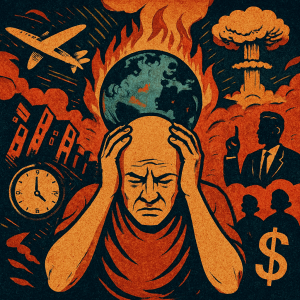
Isn’t life frustrating? The world seems like a boiling mess of problems. I feel overwhelmed—whether by a personal life haunted by relationship issues, health problems, and inherent fears; or professional life stuffed with high-octane stress, inhumane policies, and untenable deadlines; or social life trampled by the unscrupulous ruling class, demanding obligations, and unrealistic expectations.
Exhausted, I sometimes wonder where the world is headed. Haven’t the world wars, genocides, and ravaged landscapes already shown that humanity is destroying itself and the planet?
Still, we never stop. We keep painting our present in dark shades. Seems our race is addicted to creating problems.
Where will this take us?
Speculating on the fate and future of the world may be futile. Yet I searched for answers in an effort to keep myself from running naked through the streets screaming aloud. So I dug into books, long interviews, and in-depth articles.
My quest took me through philosophical paths of stale materialism, puzzling metaphysics, and transcendent spirituality. Though I found many explanations, two stood out.
One is a common doomsday idea: that humanity is facing a decadence like never before. We will stoop to a point where we would annihilate ourselves and the planet with the weapons we have invented. There is no escape from this ultimate end. All we can do is maybe delay it.
The second doesn’t paint such a grim picture.
It came to me as I was listening to ‘Buddha at the Gas Pump‘, a long-running interview series with people describing spiritual awakenings.
Rick Archer, the host of the show, posited that our current crises may be a painful prelude to a radical shift in the collective consciousness. He believes that soon everyone will awaken spiritually, transforming us into a peaceful race.
Sounds fairly utopian. I know.
But to make his case, Rick Archer points toward the increasing number of people turning away from a hedonistic lifestyle, societies getting back to meditation and spirituality, and the awe-inspiring number of spiritually awakening people around the world—he has interviewed more than 750 of them to date. These may not be mere coincidences.
The caveat, however, is that every phase change comes on the heels of great chaos. Take water on a stove, for example. The phase change into steam doesn’t happen at low temperatures. Water heats and boils until a tipping point, and then vaporizes into steam.
Likewise, our collective consciousness is going through a period of pain. All the problems we see around us are part of this. They will add up until they touch a breaking point, resulting in a great shift.
I find it more reassuring. At the very least, it gives us hope—something the dystopian view does not.
Both explanations are speculative, even mythical. Given a choice, would you choose to believe in the dark future or the brighter one?
